Dreadmoor Fishing Guide: How It Works
How fishing works in Dreadmoor: a first-person skill system on fish stamina and line tension with QTEs, plus what hands-on previews showed.
Last updated: September 25, 2026
Fishing is the center of Dreadmoor — it pays for your boat, your gear, and your survival. This page covers what the developers have confirmed about the system, what hands-on previews and playtest streams added, and what is worth testing first when the demo arrives on October 6, 2026.
The officially described system
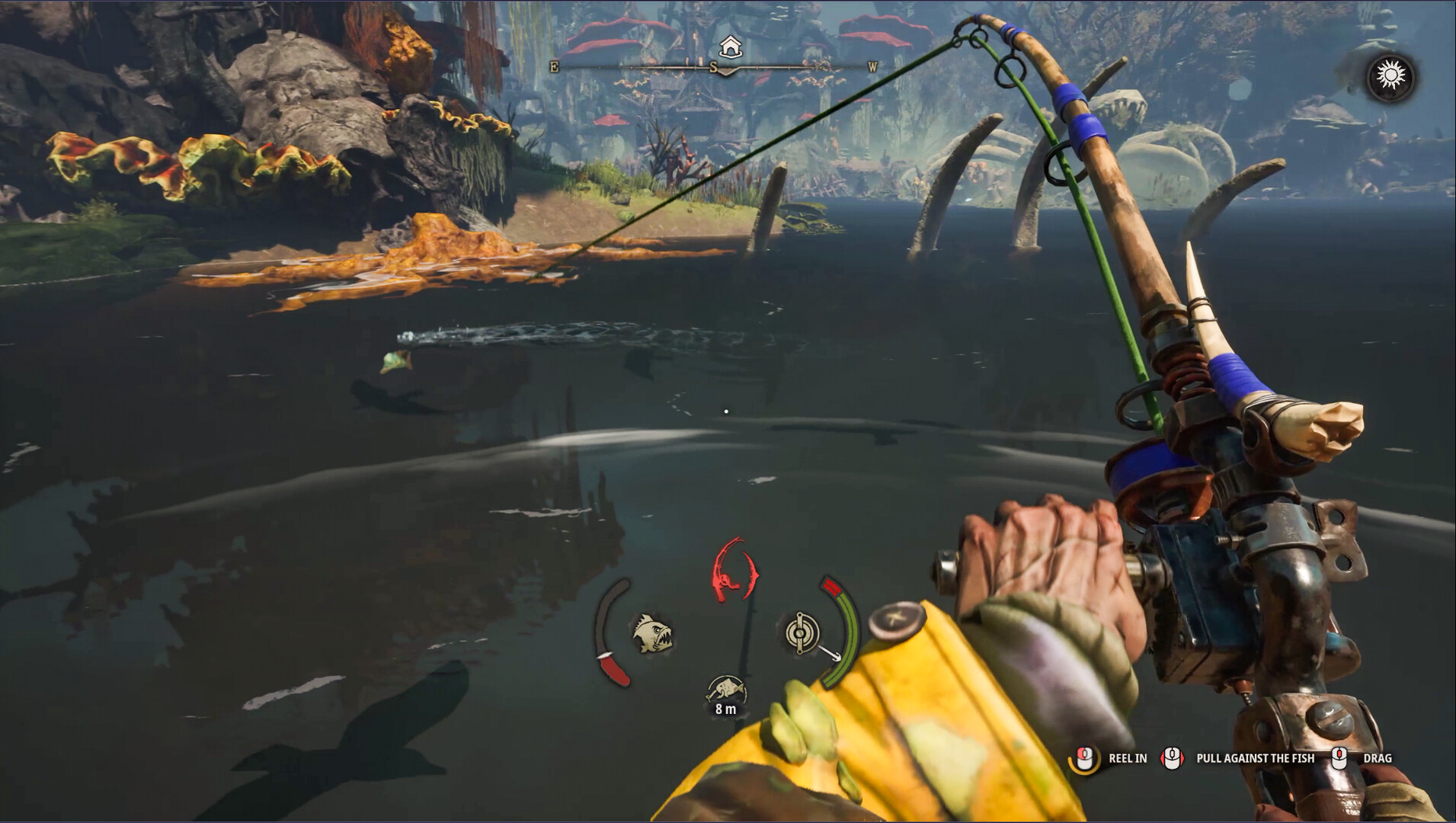
The developers' FAQ describes fishing precisely: it is first-person and skill-based, built around two meters — fish stamina and line tension — with quick-time events appearing at key moments to keep fights exciting. It is explicitly not a fishing simulator; it mixes immersion with arcade elements.
Fishing also anchors the whole game loop: catch fish, process them into materials, sell or dissect them, and reinvest in bait, gear, and your trawler. One rule makes fishing tense: most equipment is stored safely between trips, but the catch can be lost if your ship is destroyed.
What hands-on previews showed
Preview builds shown at GDC, PAX East, and Summer Game Fest 2026 gave journalists (and playtest streamers) hours with the system. Their impressions line up remarkably well:
- Finding fish: look for disturbed water — bubbles, ripples, or a visible fishing ring — then park your boat and cast in. That has been the standard tell in every hands-on build shown so far, from GDC through Summer Game Fest.
- Bait matters: the bait you pick changes who bites. PAX East builds already showed fish with preferred baits, and September playtest streams show a bait-selection screen where "the bait you choose affects the chance" of a catch.
- The fight: hold to reel, drag opposite to where the fish darts (mouse or A/D keys), and watch the stamina and tension gauges — pull against a darting fish and your line can snap.
- After the catch: every fish goes into a glossary — preview builds record a three-star rarity rating, a peaceful-or-violent temperament tag, weight, and personal-record tracking for each catch.
- The loop feeds itself: small fish are worth little to sell but grind down into bait for bigger prey — a Monster Hunter-style rhythm where today's catch is tomorrow's lure.
Casting: the one skill you control before the fight
Two details from the playtest define the cast itself. First, cast distance is held, not tapped — the tutorial line is a longer hold casts farther, so reaching mid-water targets is a matter of committing to the throw. Second, the spot you are casting at announces itself: disturbed water, bubbles, ripples, or the visible fishing ring that preview builds used to mark a bite location.
That gives fishing a search-and-decide texture before any fish is hooked: read the water, pick the bait, pick the distance, commit. The developers' own copy frames it the same way — "experiment with different baits" is an instruction to make choices, not to wait for random bites.
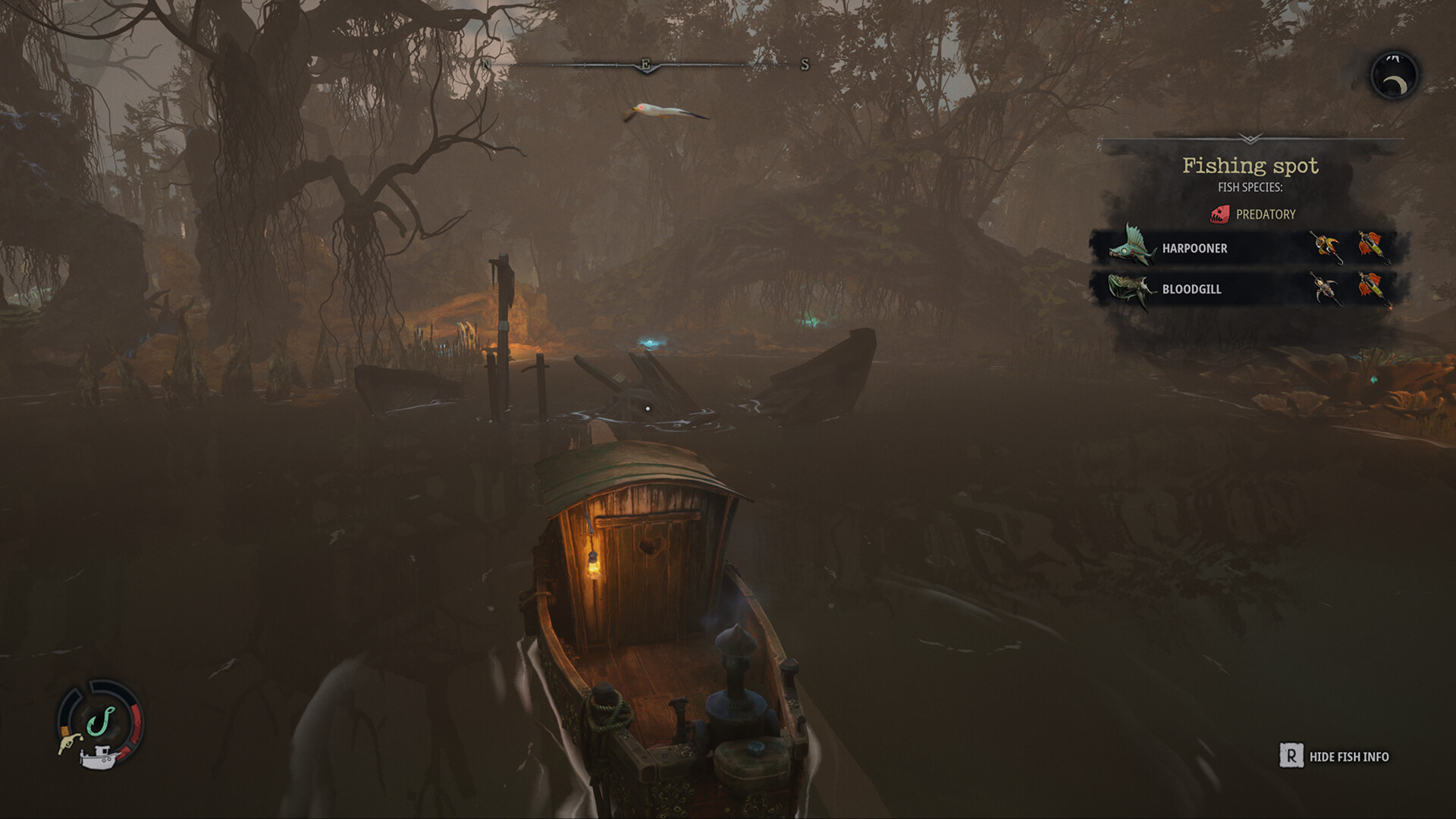
Official store screenshots also confirm how fishing spots surface information: approaching a marker pops a "Fishing spot" panel listing the species present (a recent screenshot shows predatory Harpooner and Bloodgill) together with the lures each one responds to. Every species named so far is tracked in one place — see the species ledger.
What the glossary is for
Every fish you land goes into a glossary, and the entries are more detailed than they first appear: a three-star rarity rating, a peaceful-or-violent temperament tag, the catch's weight, and personal-record tracking. That is a collector's checklist hiding inside a fishing minigame — three stars and record weights give you per-species goals long after the selling economy stops being interesting.
The temperament tag has a practical edge too: "violent" fish are the ones the FAQ's combat warnings are about, the predatory species that attack rather than get caught quietly. Knowing what is on your line before you reel it in is survival information, not flavor text.
Treat these as description of preview and playtest builds, not final tuning — the developers reworked the fishing system itself between playtests. The October 6 demo is the first build where you can check every detail above yourself.
Progression: skill tree, bait, storage
- Fishing Skill Tree — confirmed as a dedicated progression track. The likely currency is torn pages found while exploring: a PAX East preview reported bait crafting is "locked behind the skill-tree" and playtest streams show pages unlocking bait recipes such as wound bait. The full tree is not public yet.
- Bait and lures — crafted, not just found. See the bait guide for the crafting loop.
- Fish storage — a dedicated trawler storage upgrade exists, and how much you can hold defines how profitable a run can be (boat upgrades).
What to test first in the demo
- The reworked fishing feel: cast, hook, and fight one of each fish type you meet.
- Whether different baits really change your bites — and which bait the early species prefer.
- Where the Fishing Skill Tree screen sits and what torn pages unlock first.
- How the glossary tags your first few catches.
We will re-verify this page against the demo build the day it lands.
Dreadmoor fishing FAQ
Is fishing in Dreadmoor skill-based or luck-based?
Skill-based, by the developers' own description: first-person, built around fish stamina and line tension meters, with quick-time events at key moments. Bait choice and casting decisions change your results.
What are the fishing controls?
From preview builds: hold to reel, move against the fish's direction when it darts (mouse or A/D keys), and watch the stamina and tension gauges. The demo will confirm final bindings.
Can you fish at night?
You can try — but night is when the water turns hostile. Preview builds treated night as something to survive, with post-dark attacks, and the trawler's lantern exists to support night operation once you are geared for it.
What happens if my line snaps?
You lose the fight and the fish. The tension system exists to make overplaying a hooked fish costly — the risk is the fight, not a fine.
What happens to my catch if my ship sinks?
You lose it. The developer FAQ makes fish the exception to safe storage: most equipment survives between trips, but the catch can be lost if your ship is destroyed. That single rule is why hull upgrades protect your income.
Is there a fishing skill tree?
Yes — a dedicated Fishing Skill Tree is confirmed, gated by torn pages found while exploring, with bait recipes among the known unlocks. Its full contents have not been published.